




PCB Cost: How Much Does a Printed Circuit Board Really Cost?

PCB pricing is never a fixed number.
The same board can cost anywhere from $0.5 to $500+, depending on its configuration.
The reason is simple: PCB is not a standardized product—it is a custom-manufactured engineering product driven by materials, structure, and process complexity.
👉 In other words:
There is no fixed PCB price—only cost driven by specifications.
What Determines PCB Cost?
PCB cost is the result of multiple manufacturing variables combined together.
Every design decision directly affects the final quotation.
The most basic factors include material type, board size, layer count, and overall complexity.
However, the real cost difference comes from deeper engineering-level parameters.
1. PCB Structure: Size, Layers, and Stack-up
PCB structure is one of the primary cost drivers.
Larger boards naturally require more material, increasing cost.
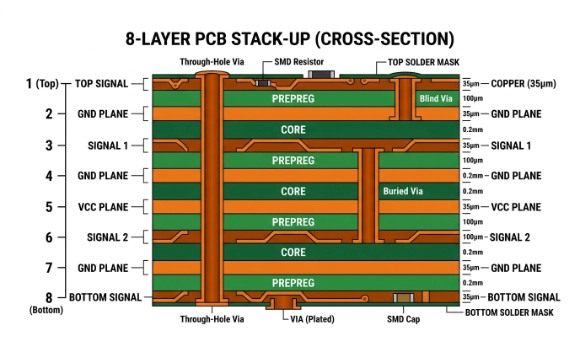
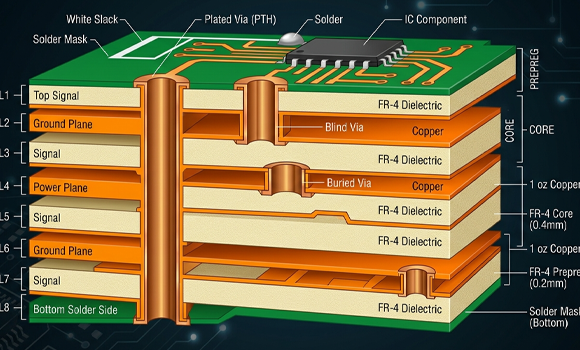
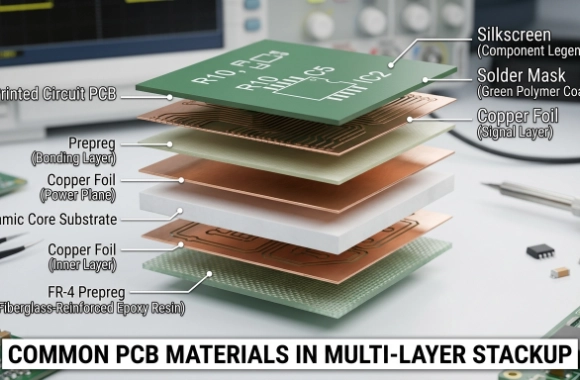
However, the more significant factor is layer count and stack-up design.
A simple 2-layer board is typically low cost, while multi-layer boards (4-layer, 6-layer, or HDI structures) significantly increase fabrication complexity.
More layers mean more lamination steps, alignment requirements, and higher yield risk.
👉 In real manufacturing, layer count often impacts cost more than board size.
2. Material Selection: FR4, High-Frequency, and Specialty Materials
Material choice plays a critical role in PCB cost.
Standard FR4 is the most cost-effective option and suitable for most consumer electronics.
However, high-speed, RF, or high-power applications require advanced materials such as high-frequency laminates or composite substrates.
These materials are more expensive and also require tighter process control during manufacturing.
👉 Better performance always comes with higher material cost.
3. Manufacturing Complexity: Vias, Traces, and Tolerances
As design complexity increases, cost differences become more significant.
Examples include:
- Microvias
- Blind and buried vias
- Ultra-fine trace width/spacing
- Impedance-controlled routing
While these features improve electrical performance, they also increase manufacturing difficulty.
More advanced processes require specialized equipment and tighter process control, which increases overall cost.
👉 The finer the design, the higher the manufacturing cost.
4. Surface Finish and Process Requirements
Surface finish is another important cost factor.
HASL is generally the most economical option, while ENIG (gold plating) is more expensive but provides better flatness and reliability.
For high-reliability designs such as BGA or fine-pitch components, advanced surface finishes are often required, which increases cost further.
5. Order Quantity and Production Efficiency
PCB cost is strongly influenced by order volume.
Small batch production carries higher unit cost due to fixed setup and engineering charges.
Large-scale production distributes these fixed costs, significantly reducing per-unit price.
👉 Simply put:
Higher volume = lower unit cost.
6. Turnaround Time: Speed Comes at a Price
Lead time is another major pricing factor.
Standard production has the lowest cost, while fast-turn or expedited orders increase pricing due to prioritized scheduling and resource allocation.
👉 The faster the delivery, the higher the cost.
7. Testing and Quality Requirements
Different products require different levels of testing, which affects cost structure.
Common testing methods include:
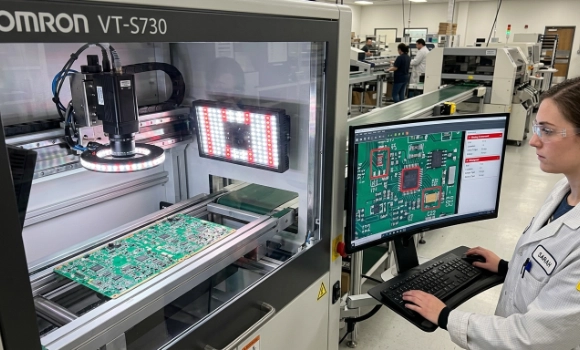
- AOI (Automated Optical Inspection)
- X-ray inspection (for BGA joints)
- ICT testing
- Functional testing
Stricter testing improves reliability but increases overall manufacturing cost.
Typical PCB Cost Range (Reference View)
In general, PCB pricing falls into several ranges:
- Simple 2-layer boards: low-cost range
- Standard 4-layer boards: medium-cost range
- HDI / high-complexity designs: high-cost range
- Industrial / high-reliability applications: premium cost range
👉 Final pricing always depends on Gerber files, BOM, and process requirements.
Why PCB Pricing Is Never Fixed
PCB is not a standard product—it is engineering-driven manufacturing.
Two boards of the same size can differ significantly in price due to:
- Layer count differences
- Material selection
- Process complexity
- Testing requirements
Price variations of several times—or even dozens of times—are common.
Engineering Perspective: How to Control PCB Cost
In engineering practice, cost optimization comes from three main directions:
- Reducing unnecessary layer count and complexity
- Using standard materials instead of specialty laminates
- Improving DFM design to reduce manufacturing difficulty
👉 The lowest cost design is usually the result of smart engineering decisions, not minimal configuration.
Manufacturing Capability Matters
In real production, PCB cost is not only determined by design, but also by manufacturing capability.
A factory with mature SMT lines, HDI capability, BGA processing expertise, and strong DFM support can reduce hidden risks while maintaining stable quality.
👉 Ultimately, cost control is a reflection of engineering capability.
Conclusion
PCB cost is not a fixed number—it is the result of engineering decisions.
| Category | Key Cost Factor | Brief Explanation |
|---|---|---|
| Structure & Materials | PCB Material | Material type (rigid/flex), size, and required performance (for example: high-frequency needs like Dk/Df, thermal performance, and reliability targets). |
| Layer Count | More layers mean more fabrication steps, tighter process control, and more material usage, increasing cost. | |
| Board Size | Larger dimensions consume more laminate and panel area; high component density can also increase process difficulty and yield loss. | |
| Manufacturing & Componentsz | Electronic Components | Higher part count, fine-pitch packages (BGA/QFN), special handling, and component scarcity can increase total cost (especially for PCBA). |
| Via Type | Complex vias (blind/buried, via-in-pad, filled/capped) add steps and increase cost. | |
| Manufacturing Process | Extra requirements such as controlled impedance, heavier copper, tight tolerances, special surface finishes, or advanced inspection add cost. | |
| Production & Order | Order Quantity | Higher volumes generally reduce unit cost by spreading setup and tooling across more pieces. |
| Turnaround Time (TAT) | Shorter lead times require priority scheduling and can significantly increase price. | |
| Testing Requirements | More extensive testing (for example: electrical test coverage, ICT, X-ray for BGAs) increases manufacturing cost. | |
| Labor Cost | High-skill labor, higher complexity, and lower yields increase labor and overhead. |
Understanding these cost drivers helps engineers make better design choices early in the development stage, achieving the right balance between performance, reliability, and cost.
Ready for Production? Kickstart Your Project Now. info@ysx-tech.com
Unsure About the Design? Consult with Our Lead Engineers Today. contact us
Share on Social:


