





Plated Through Slots (PTS): Definition, Design, and Applications in PCB

What Are Plated Through Slots?
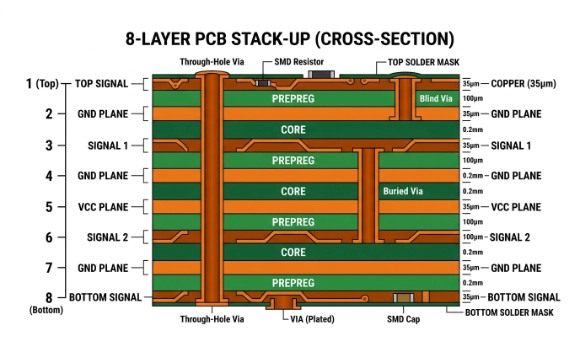
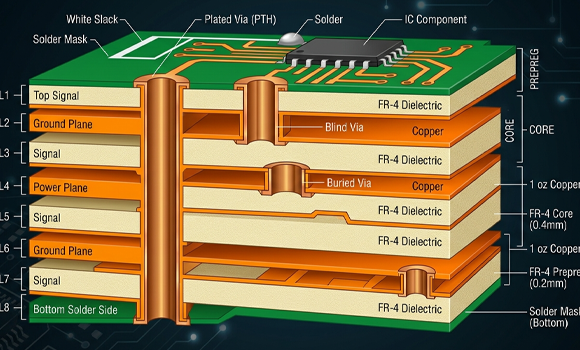
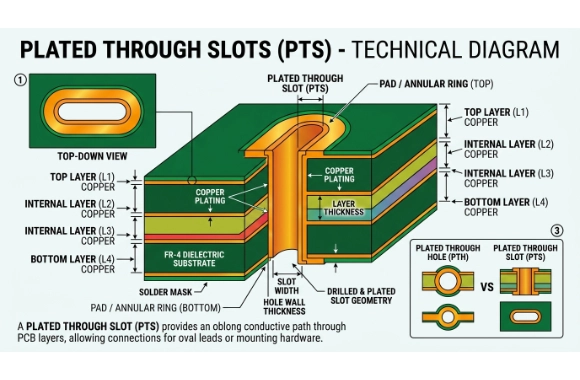
Plated Through Slots (PTS) are non-circular holes or slots in a printed circuit board (PCB) that are plated with copper, allowing electrical connections between different PCB layers.
Unlike standard plated through holes (PTH), which are typically round, plated through slots are designed in rectangular or oval shapes to accommodate specific component leads and improve mechanical fitting.
These slots function similarly to vias or through-holes by providing both electrical conductivity and mechanical support within the PCB structure.
Types of PCB Slots
PCB slots can generally be classified into two main types:
1. Plated Through Slots (PTH Slots)
- Copper-plated inner walls
- Provide electrical connectivity between layers
- Used for conductive components and connectors
2. Non-Plated Through Slots (NPTH Slots)
- No copper plating
- Used for mechanical positioning or isolation
- No electrical function
Both types are commonly used in PCB fabrication depending on the application requirements.
Why Use Plated Through Slots?
Plated through slots are essential when standard round holes cannot meet design needs. Their main advantages include:
- Better fit for rectangular or blade-shaped leads
- Improved soldering reliability (reduced gaps)
- Optimized PCB space utilization
- Enhanced mechanical stability for large components
Compared to round holes, plated slots allow for more precise component placement and compact PCB layouts.
Common Applications of Plated Through Slots
Plated through slots are widely used in both consumer and industrial electronics, especially for components with non-round pins:
- DC power jacks and connectors
- USB connectors and interface modules
- Power supply components
- Blade-style or rectangular lead components
They are particularly important in designs where mechanical strength and reliable electrical contact are required.
PCB Design Guidelines for Plated Through Slots
To ensure manufacturability and performance, proper design practices are critical:
- Clearly define slot length and width in design files
- Specify slots in the Gerber mechanical layer
- Add copper pads on top and bottom layers
- Maintain proper annular ring width
- Ensure suitable aspect ratio (slot depth vs. width)
Incorrect slot definitions can lead to manufacturing errors or poor electrical connections.
Manufacturing Process of Plated Through Slots
The fabrication of plated through slots typically includes:
- Milling or routing to create the slot shape
- Cleaning to remove debris and residues
- Copper plating (electroplating) to form conductive walls
- Surface finishing (e.g., ENIG, HASL)
This process is similar to plated through-hole manufacturing but requires additional precision due to the slot geometry.
Key Design Considerations
When designing plated through slots, engineers should pay attention to:
- Minimum slot width (typically ≥0.5 mm depending on manufacturer)
- Spacing between slots and other features
- Compatibility with assembly processes
- Accurate documentation in fabrication files
Proper communication with the PCB manufacturer is essential to avoid misinterpretation of slot requirements.
Conclusion
Plated Through Slots are a critical feature in modern PCB design, enabling efficient electrical connections and mechanical support for non-standard component leads.
By improving space utilization, solder reliability, and structural integrity, PTS plays a key role in high-performance and compact electronic devices.
design specifications is crucial to achieving long-term reliability and optimal performance.
Ready for Production? Kickstart Your Project Now. info@ysx-tech.com
Unsure About the Design? Consult with Our Lead Engineers Today. contact us


