




What is a Rigid-Flex PCB?
rigid-flex PCB manufacturing from YSX Electronics combines rigid sections for component mounting with flexible sections for interconnection in a single board. This construction can reduce separate connectors and cables while supporting compact product layouts. We review your layer stackup, bend areas, material specifications and mechanical drawings to assess manufacturing requirements. Share your design files, installation constraints and assembly needs to discuss a board structure suited to your application, with fabrication details confirmed through technical project review before moving into production.
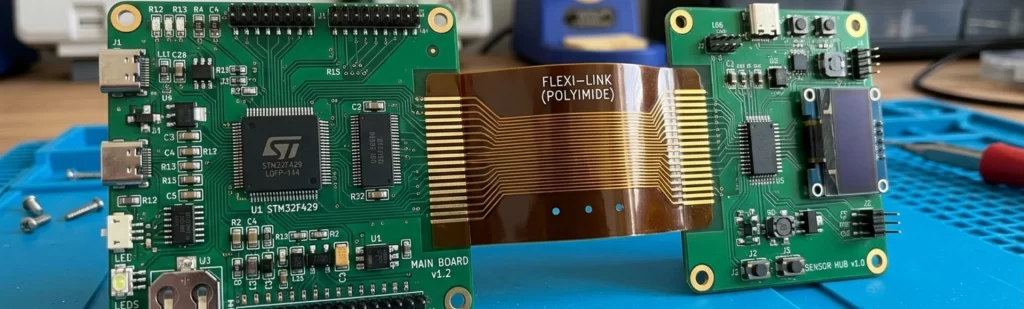
Why Choose Rigid-Flex PCB
Rigid-flex PCBs are designed for high-reliability, compact, and high-performance applications.
High Component Density
🔹 Supports multilayer and HDI structures
🔹 Enables compact product design
🔹 Reduces overall system size
Superior Reliability
🔹 Eliminates connectors and wiring failures
🔹 Performs well in vibration environments
🔹 Reduces long-term failure risks
Improved Signal Integrity
🔹Continuous copper traces reduce signal loss
🔹Better impedance control for high-speed designs
Simplified Assembly
🔹 Fewer components and interconnections
🔹 Easier integration into compact devices
Our Capabilities
YSX supports advanced rigid-flex PCB manufacturing for complex and high-end applications.
| Capability Category | YSX Capability |
| Rigid Layers | 2–32 layers |
| Flex Layers | 1–6 layers |
| Base Materials | FR4 + Polyimide (PI) |
| PCB Thickness | 0.1mm – 3.2mm |
| Copper Thickness | 1/3 oz – 6 oz |
| Min Trace / Space | 2/2 – 3/3 mil |
| Min Hole Size | 0.1 mm |
| Surface Finish | ENIG, OSP, Immersion Silver |
| Via Types | Blind, buried, microvias |
| Special Processes | HDI, impedance control, filled vias |
| Additional Features | EMI shielding, stiffeners, adhesive backing |
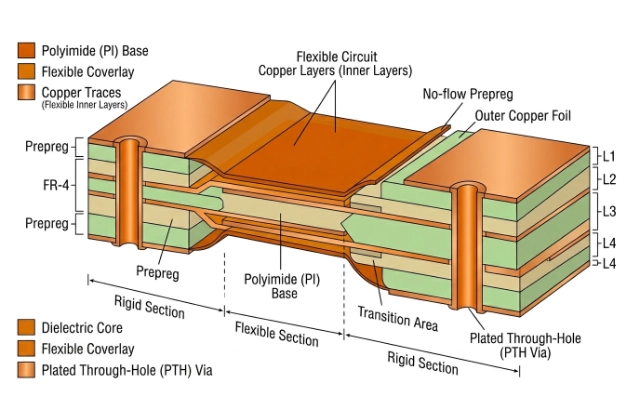
Rigid-Flex Construction Types
Different structures enable different levels of flexibility, density, and performance.
- Standard Rigid-Flex → General applications
- HDI Rigid-Flex → High-density, miniaturized devices
- Bookbinder Structure → Multi-layer folding design
- Advanced Stack-ups → Complex 3D packaging
These structures allow engineers to optimize space and performance beyond traditional PCB limitations.
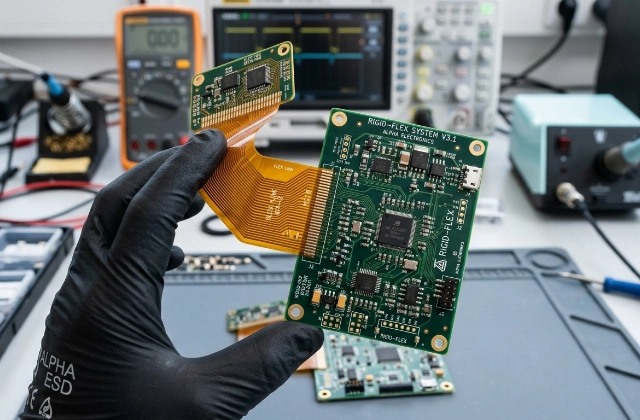
When to Choose Rigid-Flex PCB
Rigid-flex PCBs are best suited for projects where reliability and space optimization are top priorities.
- Choose rigid-flex PCB when you need:
- Complex 3D design or folding structure
- High reliability with minimal failure points
- Reduced connectors and wiring
- High-speed signal integrity
Cost & Design Considerations
Rigid-flex PCBs offer high performance but require careful cost and design planning.
- Higher manufacturing cost (3–7x vs rigid PCB)
- Longer design cycle
- Difficult repair after production
- Requires experienced engineering support
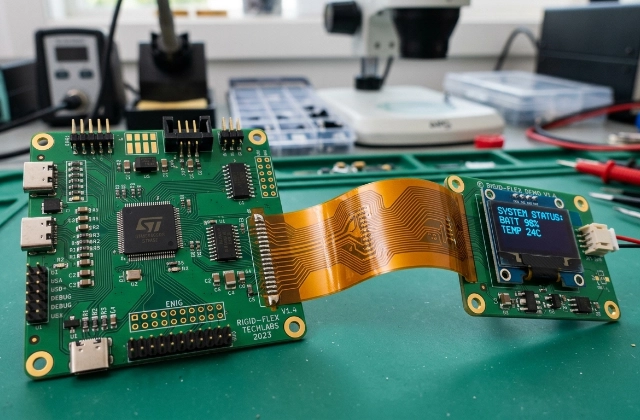
What YSX Can Do for Flexible PCB Project
YSX delivers reliable rigid-flex PCB solutions with strong engineering and manufacturing capabilities.
Looking For a Reliable Rigid-Flex PCB Manufacturer?
Contact YSX today to receive a quick quote and expert engineering support, and unlock high-quality PCB manufacturing services.